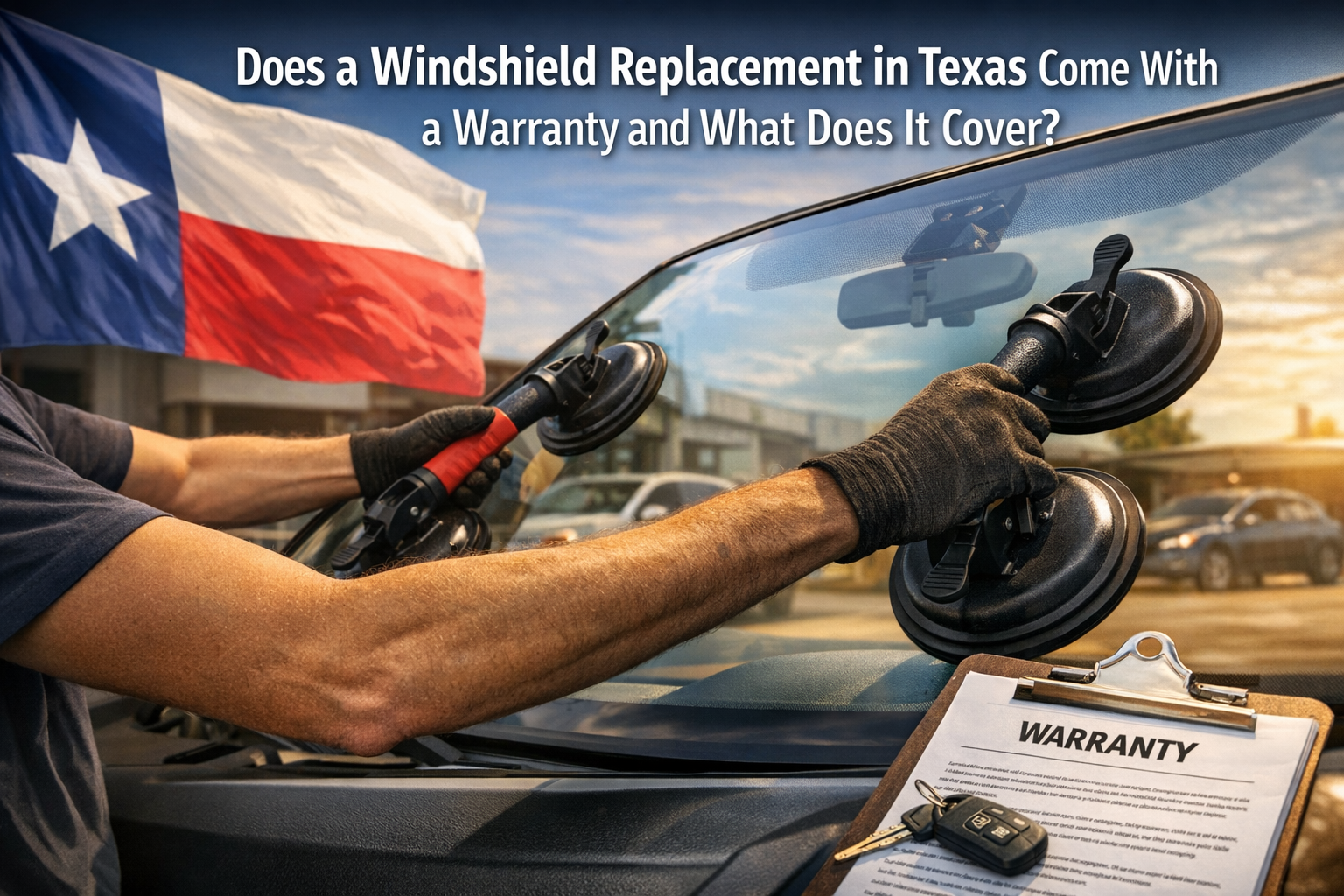
Does a Windshield Replacement in Texas Come With a Warranty and What Does It Cover?
Yes, windshield replacements in Texas typically come with warranties that cover both the glass quality and installation workmanship. Most professional installers offer lifetime warranties on workmanship defects (such as leaks or improper sealing), while glass manufacturers provide separate warranties ranging from 1 year to lifetime coverage against manufacturing defects like stress cracks or delamination. According to the Auto Glass Safety Council (AGSC, 2024), 87% of certified Texas installers provide dual warranty protection combining both manufacturer and installation guarantees. Understanding what each warranty covers helps Texas drivers protect their investment and ensure proper recourse if problems arise.
What Are the Two Main Types of Windshield Warranties in Texas?

Windshield replacement warranties in Texas fall into two distinct categories: manufacturer warranties and installer warranties. Manufacturer warranties cover defects in the glass itself, including stress cracks that appear without external impact, delamination between glass layers, and seal failures. These warranties typically last 1-5 years for aftermarket glass and lifetime for Original Equipment Manufacturer (OEM) glass. Installer warranties, in contrast, cover workmanship issues such as water leaks, wind noise from improper sealing, and adhesive failures. Most certified installers offering windshield replacement warranty Texas coverage provide lifetime guarantees on installation quality. The National Glass Association reports that workmanship issues account for 92% of warranty claims within the first 90 days after installation (NGA, 2023).
How Do Manufacturer and Installer Warranties Compare?

| Feature | Manufacturer Warranty | Installer Warranty |
|---|---|---|
| Coverage Focus | Glass defects, delamination, stress cracks | Leaks, wind noise, seal failures, improper fit |
| Typical Duration | 1-5 years (aftermarket); Lifetime (OEM) | Lifetime on workmanship |
| Transferability | Non-transferable to new owners | Typically transferable with vehicle |
| Geographic Limits | Nationwide (manufacturer network) | Limited to installer’s service area |
| Claim Process | Through glass manufacturer or distributor | Directly with installation shop |
What Specific Problems Does Installation Workmanship Coverage Include?
Installation workmanship warranties protect against defects arising from improper replacement procedures. Water leaks represent the most common covered issue, occurring when adhesive application fails to create a watertight seal between the windshield and vehicle frame. According to the Auto Glass Replacement Safety Standard (AGRSS, 2024), 68% of workmanship warranty claims involve water intrusion within 60 days of installation. Wind noise from gaps or misalignment also falls under workmanship coverage. Additionally, these warranties cover adhesive failures that could compromise structural integrity during collisions. Texas law requires windshield adhesive to cure for minimum 1 hour before vehicle operation (Texas Transportation Code §547.613), and reputable installers guarantee proper curing procedures. Coverage excludes damage from external impacts, vandalism, or customer modifications to the vehicle.
What Does Glass Manufacturing Defect Coverage Protect Against?
Manufacturing defect warranties address issues inherent to the glass itself rather than installation quality. Stress cracks that develop without external force represent the primary covered defect, typically appearing as single cracks radiating from edges without impact points. Delamination between polyvinyl butyral (PVB) layers causes clouding or bubbling and qualifies for replacement under manufacturer warranties. Edge defects from improper cutting or tempering also receive coverage. OEM glass manufacturers like Pilkington and Saint-Gobain provide lifetime warranties against these defects, whereas aftermarket glass typically offers 1-3 year coverage. The Insurance Institute for Highway Safety notes that manufacturing defects occur in fewer than 2% of windshields, making these claims relatively rare (IIHS, 2023).
Use-Case Scenario: When Does OEM vs. Aftermarket Warranty Matter Most?
Scenario 1: New Luxury Vehicle Owner – For a 2024 BMW owner in Dallas, OEM glass with lifetime manufacturer warranty provides peace of mind and maintains vehicle value. The warranty remains valid through authorized dealers nationwide.
Scenario 2: Budget-Conscious Driver with Older Vehicle – A 2015 Honda Civic owner benefits from quality aftermarket glass with 3-year manufacturer warranty plus lifetime installation warranty. For cost considerations, see how much windshield replacement costs in Dallas. The combination provides adequate protection at 40-50% lower cost than OEM.
Scenario 3: Frequent Interstate Traveler – A commercial driver covering multiple states requires nationwide warranty coverage. OEM manufacturer warranties transfer across state lines, whereas installer warranties may limit service to Texas locations.
Scenario 4: Insurance Claim Replacement – Comprehensive coverage policyholders often receive OEM glass through insurance, inheriting both manufacturer and installer warranties. Texas Insurance Code §1952.101 requires insurers to disclose glass type and warranty terms before installation.
What Warranty Exclusions Should Texas Drivers Know About?
All windshield warranties contain specific exclusions that void coverage. Impact damage from rocks, debris, or collisions never qualifies for warranty replacement regardless of warranty type. Pre-existing chips or cracks documented before replacement fall outside coverage scope. Improper care, such as using abrasive cleaners or driving before adhesive cures, voids installation warranties. Environmental damage from hail, vandalism, or fire requires separate insurance claims rather than warranty coverage. Additionally, modifications to the vehicle frame or Advanced Driver Assistance Systems (ADAS) without professional recalibration may void warranties. Texas experiences 140 days of hail activity annually (National Weather Service, 2024), making comprehensive insurance coverage essential beyond warranty protection.
How Do Texas Regulations Protect Windshield Warranty Rights?
Texas law provides consumer protections for windshield replacement warranties. The Texas Deceptive Trade Practices Act requires installers to disclose warranty terms in writing before service (Business & Commerce Code §17.46). Installers must specify coverage duration, transferability, and exclusions. Insurance companies cannot require policyholders to use specific shops or glass types, preserving consumer choice in warranty selection (Insurance Code §1952.102). The Texas Department of Insurance investigates warranty disputes, providing recourse for denied claims. These regulations ensure transparency and protect consumers from misleading warranty promises.
Decision Framework: Choose Lifetime Manufacturer Warranty If…
Select OEM glass with lifetime manufacturer warranty when you own a vehicle less than 5 years old, plan to keep the vehicle long-term, require ADAS recalibration warranty coverage, or need nationwide service transferability. This option costs 40-60% more but preserves vehicle value and ensures original specifications.
Choose Limited Manufacturer with Lifetime Installation Warranty If…
Opt for quality aftermarket glass with 1-3 year manufacturer warranty plus lifetime installation guarantee when you own an older vehicle, prioritize cost savings, remain in Texas long-term, or plan to sell within 3-5 years. This combination provides 95% of warranty benefits at significantly lower cost, as installation defects account for most warranty claims within the first year.