Is Fixing a Windshield Crack Before Winter Worth It?
Yes, cold weather can make a windshield crack spread faster, and repairing it before winter is worth it if the chip is smaller than a quarter or the crack is shorter than about 6 inches (roughly the length of a dollar bill). Freezing temperatures and sudden temperature swings create thermal stress that can turn a small chip into a long crack, sometimes overnight. Acting early is the cheapest way to avoid a full replacement.
Does Cold Weather Make a Windshield Crack Spread Faster? The Short Answer

Windshield glass contracts in cold weather and expands in heat. This cycle, called thermal expansion and contraction, puts pressure on any existing chip or crack. A windshield is made of laminated glass: two layers of glass bonded with a plastic interlayer. It resists shattering but is not immune to crack propagation under thermal shock.
When temperatures drop suddenly, the outer surface of the glass cools faster than the inner surface. This uneven cooling creates thermal stress across the glass. A chip acts as a weak point where that stress concentrates, which can cause the crack to grow.
Why Do Windshield Chips Spread in Cold Weather?
- Rapid temperature change: Moving from a warm garage to freezing outdoor air creates expansion and contraction mismatches in the glass.
- Defroster and car heater use: Blasting hot air onto a frost-covered windshield creates a sharp temperature gradient between the inside and outside glass surfaces.
- Frost and ice buildup: Water that seeps into a crack expands as it freezes, wedging the crack wider.
- Improper ice scraper use: Scraping hard directly over a chip adds mechanical stress to an already weakened area.
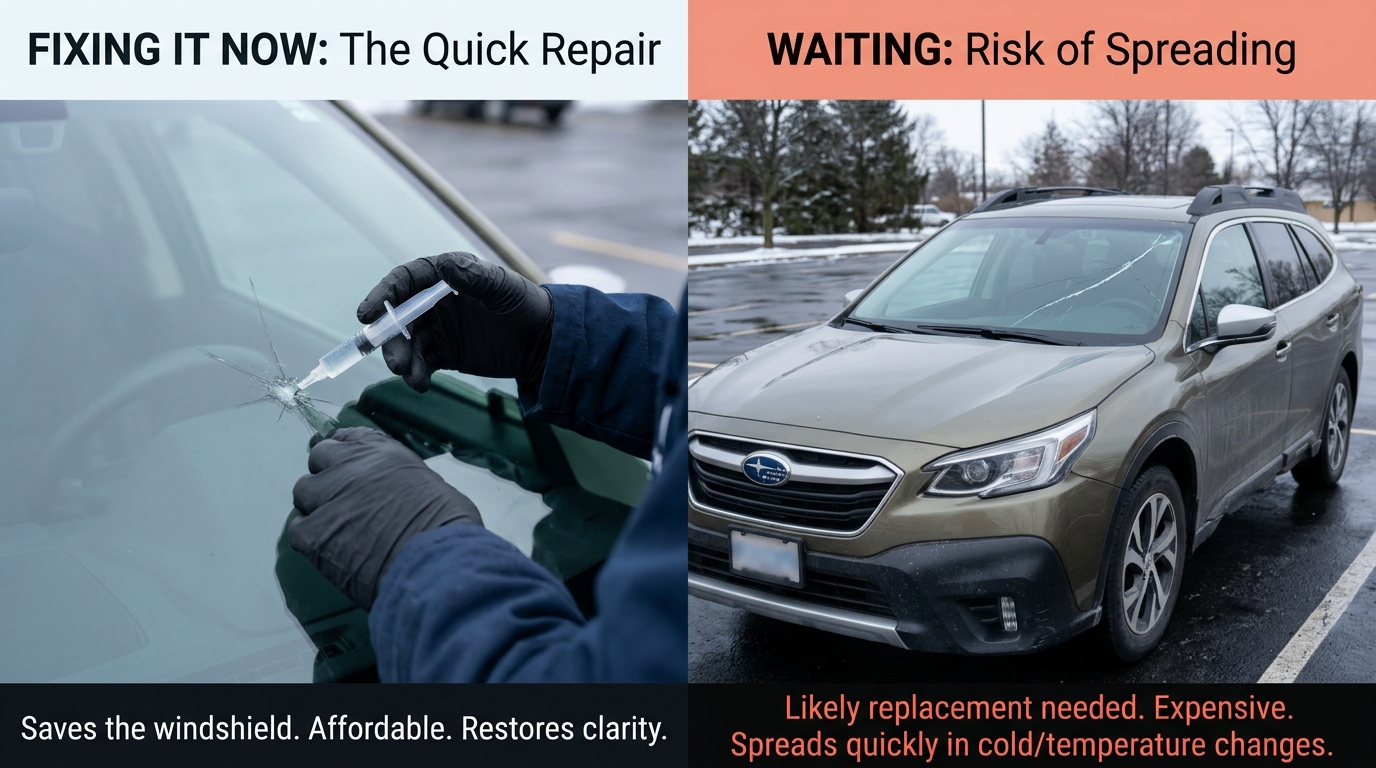
What You Get: Fixing the Crack Now vs. Waiting

| Option | What’s Included | What’s Extra |
|---|---|---|
| DIY windshield repair kit | Glass resin, injector, UV curing strip | Professional labor, warranty, guarantee against future spreading |
| Professional chip repair | Glass technician labor, resin injection, polish finish | Replacement if damage exceeds repair limits |
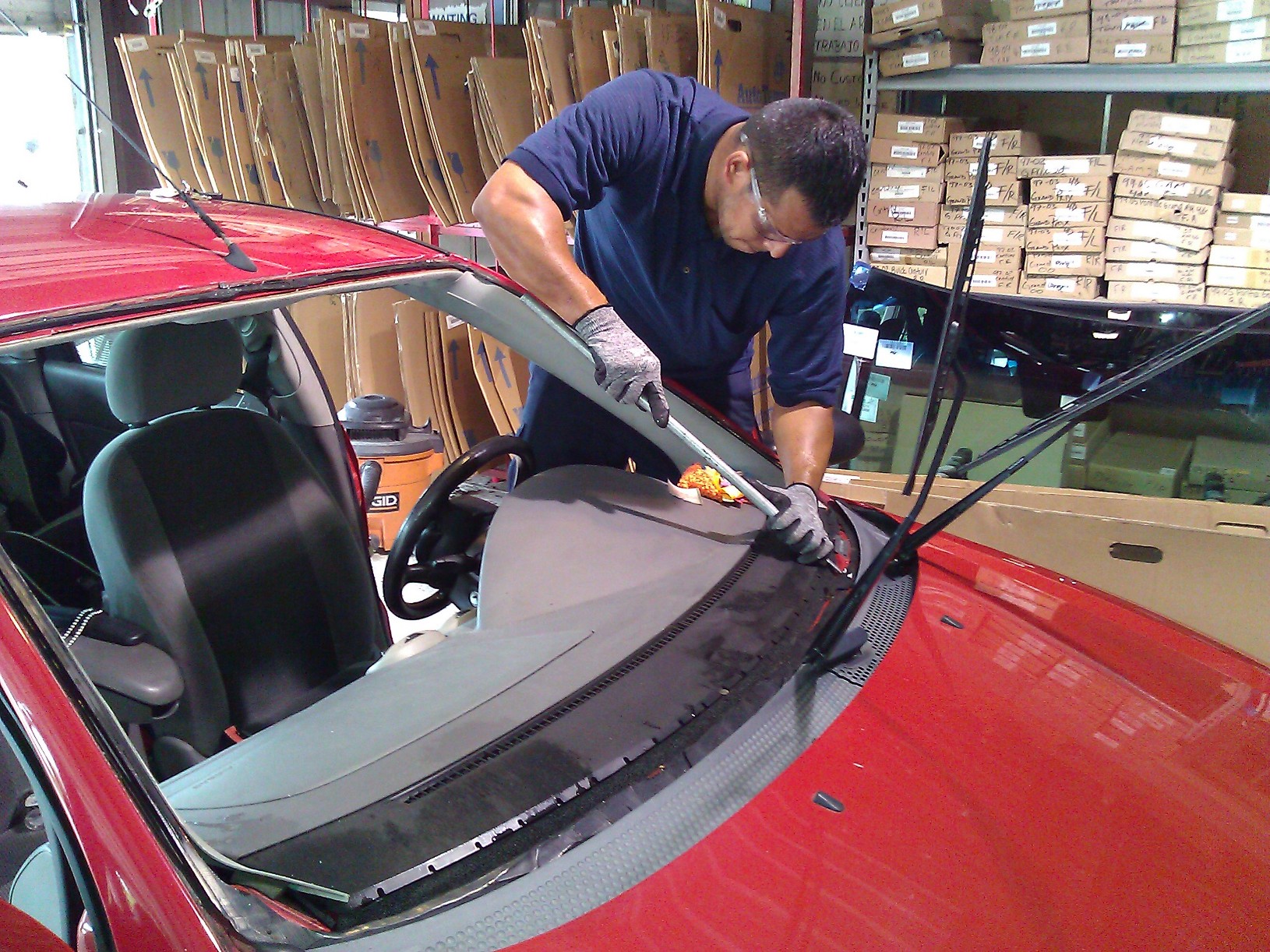
| Windshield replacement service | New laminated glass, installation, ADAS recalibration (if equipped), disposal of old glass | Rental car, expedited scheduling fees, OEM glass upgrade |
Cost Breakdown: Windshield Crack Repair in 2025
- DIY crack repair kit: $10–$25 per kit
- Professional chip repair: $50–$150 for the first chip, with additional chips often $10–$25 each
- Windshield replacement cost: $200–$500 for standard vehicles with aftermarket glass; $600–$1,500+ for vehicles that need ADAS camera recalibration or OEM glass
- ADAS recalibration alone: typically adds $150–$400 to a replacement
- Insurance claim: Many comprehensive policies with glass coverage waive the deductible for chip repair, while full replacement usually falls under your standard comprehensive deductible. A few states, including Florida, Kentucky, and South Carolina, require zero-deductible windshield replacement for drivers with comprehensive coverage.
Glass claims are generally treated as comprehensive (not at-fault) claims, so a single repair claim is unlikely to raise your premium on its own, but check with your insurer.
Expected Benefits & ROI Analysis
How Fast Does a Windshield Crack Spread in Freezing Weather?
There’s no fixed rate, but a small chip can turn into a long crack in a single cold night, especially after a big temperature swing or a hot defroster blast. Overnight frost on a car parked outside is one of the most common triggers.
- Repair now (chip stage): $50–$150, about a 30-minute appointment, no ADAS recalibration needed because the original glass stays in place.
- Wait until spring: Risk of full windshield replacement at $200–$1,500+, plus safety concerns from reduced structural integrity.
The return on investment is clear: a chip repair usually costs a fraction of a replacement, often less than a quarter of the price once ADAS recalibration is involved.
Does Defrosting a Cold Windshield Cause Cracks to Grow?
Yes. Pointing a car heater or defroster on high directly at a frosted windshield creates thermal shock, a rapid, uneven temperature change that stresses the glass. It’s one of the most common causes of winter windshield damage.
Does Hot Water on a Cold Windshield Cause Cracking?
Yes. Pouring hot water on a frozen windshield is one of the fastest ways to cause a stress fracture. The sudden temperature difference can crack even an undamaged windshield, not just one with an existing chip.
Who Should Invest in Windshield Crack Repair Before Winter
- Drivers with a chip smaller than a quarter or a crack under 3 inches
- Anyone who parks outdoors and experiences nightly frost
- Vehicles with ADAS cameras mounted on the windshield, where even small cracks can obstruct calibration
- Drivers in regions with frequent sudden temperature drops, such as the Midwest and Northeast U.S.
Who Shouldn’t Bother With Repair (Replacement Is Better)
- Cracks longer than 6 inches, which exceed most professional repair limits
- Damage directly in the driver’s line of sight, where many shops won’t repair because the resin can leave a slight distortion
- Cracks that reach the edge of the windshield, where the glass is structurally weakest
- Windshields with multiple chips (usually more than three), where overall glass integrity is already compromised
Alternatives to Consider
1. DIY Windshield Repair Kit
A glass resin kit costs $10–$25 and works for chips smaller than a quarter and cracks shorter than about 3 inches. It’s a short-term fix, not a guaranteed stop to crack propagation in freezing temperatures.
2. Professional Chip Repair
A glass technician injects resin under vacuum pressure, which bonds more securely than most DIY kits. This is the best option for stopping cold weather glass damage before it spreads.
3. Full Windshield Replacement Service
If the crack is longer than 6 inches, replacement is the safe option. On ADAS-equipped vehicles, the forward-facing camera usually needs recalibration after replacement, and some manufacturers recommend OEM or OEM-equivalent glass for proper camera function.
4. Preventive Winter Car Care Habits
- Park in a garage when possible to reduce frost and temperature swings
- Use a windshield cover to prevent frost buildup overnight
- Warm the car gradually instead of blasting the defroster on high immediately
- Use a proper ice scraper and avoid direct pressure over any chip
For drivers researching how cold weather affects existing damage, understanding the connection between a cold weather windshield crack and thermal stress helps clarify why acting quickly matters more in winter than any other season.
Tips to Stop a Windshield Crack From Spreading Overnight
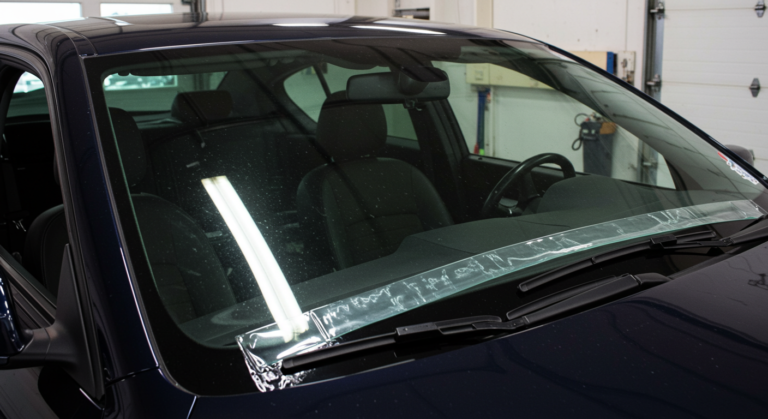
- Apply clear tape over the chip to keep out moisture and debris.
- Avoid parking in direct sun during the day if temperatures will drop sharply at night.
- Keep the cabin temperature stable and avoid extreme heater settings.
- Schedule a chip repair appointment within 24–48 hours of noticing damage.
Final Verdict: Is Windshield Crack Repair Worth It in Cold Weather?
Windshield crack repair is worth it when the damage is small, recent, and outside the driver’s direct line of sight. Professional chip repair at $50–$150 costs a fraction of a full windshield replacement at $200–$1,500+. Cold weather speeds up crack propagation, so timing matters more than the repair method itself.
If the crack has already spread beyond 6 inches or reaches the glass edge, skip repair and move straight to windshield replacement. For everyone else, acting within 48 hours of first noticing a chip, before the next freezing night, offers the best return on investment and the lowest safety risk.