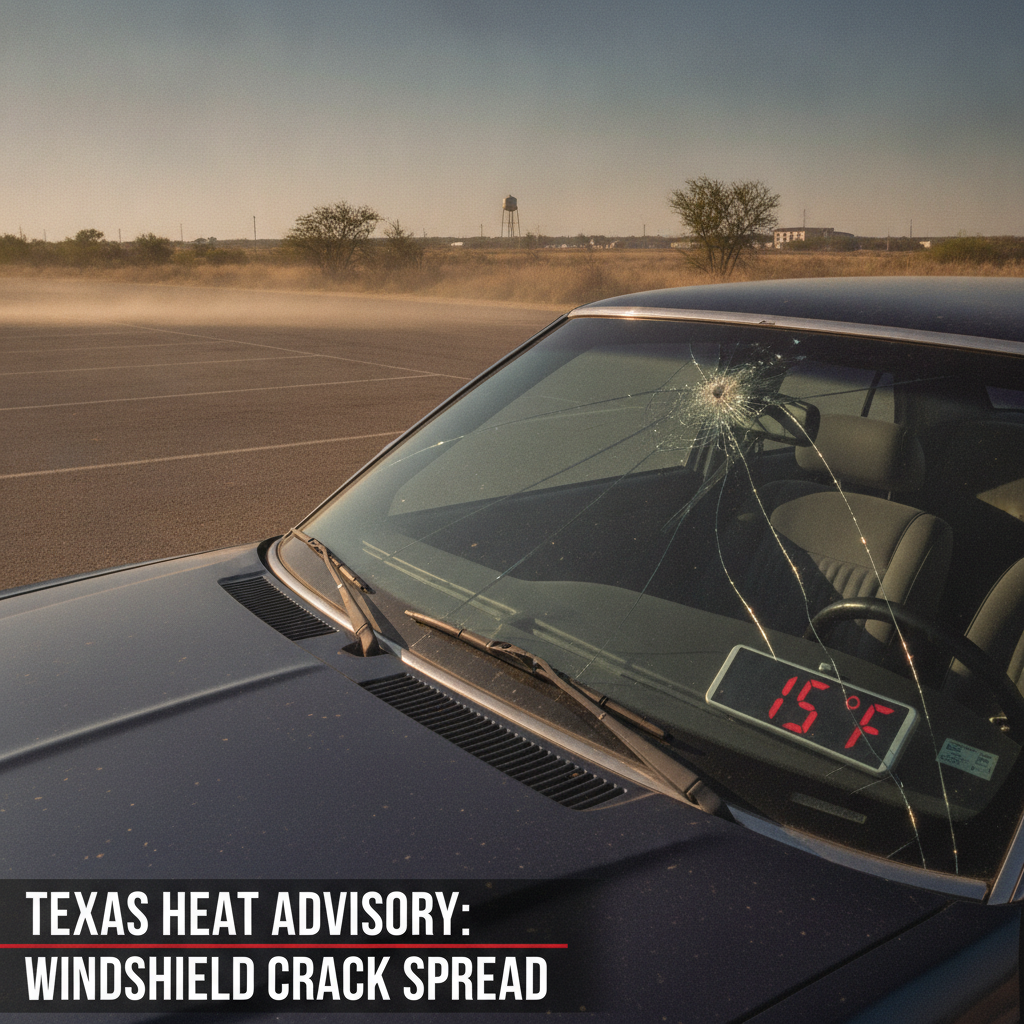
How to Prevent Windshield Crack Spreading in Texas Heat: 5-Step Guide
A windshield crack can spread when temperatures reach 80°F to 90°F in Texas, with rapid expansion occurring above 100°F due to thermal stress on auto glass. This guide provides actionable steps to assess temperature risk and prevent crack propagation in Texas’s extreme heat conditions. Skill level: Beginner. Time required: 15-30 minutes for assessment.
Understanding Windshield Crack Spreading in Texas Heat

Windshield crack expansion occurs when thermal stress exceeds the structural integrity of laminated glass. According to the National Weather Service, Texas surface temperatures regularly exceed 120°F during summer months, creating ideal conditions for heat-induced glass damage. The coefficient of thermal expansion for soda-lime glass—the primary material in automotive windshields—causes the material to expand approximately 0.000009 meters per meter per degree Celsius.
The temperature threshold for cracks varies based on several factors. Small stone chips can become stress fractures when dashboard temperatures reach 150°F to 180°F, which commonly occurs in Houston, Dallas, Austin, San Antonio, and El Paso during June through September. The PVB layer (polyvinyl butyral) between laminated safety glass layers softens at approximately 140°F, reducing windshield structural support.
Thermal expansion glass occurs unevenly across windshield surfaces. Direct sunlight heats the outer glass layer while air conditioning cools the interior surface, creating temperature differentials of 40°F to 60°F. This thermal gradient windshield effect generates internal stress points that accelerate crack propagation rate by 200% to 400% compared to moderate temperatures, according to research on automotive glass thermal stress.
Critical Temperature Ranges for Texas Windshields
| Temperature Range | Risk Level | Crack Behavior |
|---|---|---|
| 80°F – 95°F | Moderate | Slow expansion (0.5-1 inch per week) |
| 95°F – 110°F | High | Accelerated growth (1-3 inches per day) |
| 110°F+ | Critical | Rapid propagation (3+ inches within hours) |
Before You Begin: Prerequisites for Assessment

Required Materials
- Infrared thermometer or smartphone temperature app
- Ruler or measuring tape for crack measurement
- Clear tape for temporary crack stabilization
- Parking shade or garage access
Knowledge Prerequisites
- Ability to identify laminated glass versus tempered glass
- Understanding of comprehensive coverage insurance terms
- Recognition of ANSI standards for windshield safety
Environmental Conditions
- Access to temperature monitoring during peak heat (2 PM – 5 PM)
- Awareness of local weather forecasts for temperature extremes
- Understanding of Texas Department of Transportation safety requirements
Step-by-Step Guide: Assessing and Preventing Temperature-Induced Crack Spreading
Step 1: Identify and Document Your Windshield Damage
Examine the crack under proper lighting conditions. Measure the crack length, width, and location relative to windshield edges. According to Federal Motor Vehicle Safety Standards, cracks extending into the driver’s primary viewing area (approximately 8 inches radius from steering wheel center) require immediate attention regardless of temperature considerations.
Document the following details:
- Crack type: Linear stress fracture, star break, or combination damage
- Initial length measurement in millimeters
- Distance from windshield frame (cracks within 3 inches of edges spread 60% faster)
- Presence of impact damage versus pure stress cracks
- Date and temperature when damage first occurred
Glass chip repair becomes impossible once cracks exceed 6 inches in length or penetrate both glass layers. Safelite and other certified glass technician services follow this industry standard when determining windshield repair versus glass replacement eligibility.
Step 2: Monitor Critical Temperature Thresholds Daily
Measure windshield surface temperature at three times daily: morning (before 10 AM), midday (2 PM – 3 PM), and evening (after 6 PM). Use an infrared thermometer to measure both exterior glass surface and interior dashboard temperatures. What temperature causes windshield cracks to spread in Texas heat depends on these combined readings.
Record the following data points:
- Ambient air temperature per National Weather Service reports
- Windshield exterior surface temperature in direct sunlight
- Dashboard temperature when vehicle is parked outside
- Temperature differential between glass exterior and interior surfaces
The thermal load windshield experiences peaks when surface temperatures exceed 130°F while interior glass remains below 90°F due to air conditioning use. This 40°F+ differential creates maximum thermal stress on windshields, particularly affecting existing cracks.
Step 3: Understand Thermal Expansion and Stress Factors
Calculate your windshield’s thermal expansion using the coefficient of thermal expansion for silica-based auto glass. For every 50°F temperature increase, glass expands approximately 0.045% linearly. A standard windshield measuring 60 inches wide expands by 0.027 inches when heated from 70°F to 120°F.
This expansion becomes problematic at crack boundaries where:
- Intact glass expands uniformly while cracked sections move independently
- UV radiation penetrates through cracks, heating the PVB layer unevenly
- Infrared radiation absorption differs between clear and tinted windshield sections
- Windshield adhesive (urethane) softens above 130°F, reducing edge support
The glass failure temperature for automotive windshields is approximately 750°F for complete structural failure. However, crack propagation from thermal stress occurs at much lower temperatures—as low as 80°F for pre-existing damage under thermal cycling conditions.
Step 4: Recognize High-Risk Environmental Conditions
Identify situations that accelerate windshield crack spreading in heat. Texas summer heat combined with specific behaviors creates optimal conditions for rapid crack expansion:
Critical Risk Scenarios:
- Parking lot exposure: Asphalt surfaces radiate additional heat, increasing windshield temperature by 15°F to 25°F above ambient air temperature
- Defroster use on hot days: Sudden interior heating while exterior glass remains cool creates thermal shock windshield damage
- Cold air conditioning blast: Directing maximum AC airflow onto hot windshield generates temperature differential exceeding 80°F
- Afternoon sun angle: Between 2 PM and 5 PM in Texas, solar radiation hits windshields at optimal angles for maximum heat absorption
- Dark dashboard colors: Black dashboards reach 180°F to 200°F, radiating heat onto windshield interior surface
How quickly do windshield cracks spread in Texas heat depends on cumulative exposure. A crack measuring 2 inches on Monday morning can extend to 8 inches by Friday afternoon when temperatures consistently exceed 100°F and the vehicle parks in direct sunlight.
Step 5: Implement Immediate Preventive Measures
Take these actions within 24 hours of discovering windshield damage during hot weather:
- Apply temporary stabilization: Use clear packing tape on both windshield sides to prevent dirt infiltration and provide minimal structural support (temporary solution only, not DOT approved for driving)
- Seek shade immediately: Park in covered parking structures or beneath trees to reduce windshield surface temperature by 30°F to 50°F
- Use windshield sun shade: Reflective sunshades reduce interior temperatures by 40°F and decrease thermal gradient stress
- Avoid temperature extremes: Never use defroster on maximum heat or blast cold AC directly onto cracked windshield
- Schedule emergency glass repair: Contact mobile glass service for same-day windshield repair before crack exceeds resin repair limits
Can parking in sun make windshield crack spread? Absolutely. Studies on windshield heat absorption show that cracks in vehicles parked in direct sunlight spread 3 to 4 times faster than identical damage in shaded vehicles. Does garage parking prevent crack spreading? Garage storage reduces crack expansion risk by approximately 75% by eliminating solar heating windshield effects and maintaining stable temperatures.
Troubleshooting Common Issues
If Your Windshield Crack Spreads Despite Preventive Measures
Problem: Crack extends rapidly even with shade parking and temperature control.
Solution: The crack likely originated from impact damage rather than pure thermal stress. Stone chips create micro-fractures that propagate under any heat cycling windshield conditions. Schedule immediate windshield replacement as resin repair is no longer viable for cracks exceeding 6 inches.
Action Steps:
- Contact auto insurance provider to verify comprehensive coverage windshield benefits
- Request certified glass technician inspection within 48 hours
- Avoid highway driving where wind pressure accelerates glass crack propagation
- Document crack growth with daily photos for insurance claims
If Temperature Cycling Occurs (Morning Cool to Afternoon Heat)
Problem: Daily temperature swings from 75°F morning to 105°F afternoon create repeated thermal expansion cycles.
Solution: Temperature-related glass failure accelerates under thermal cycling conditions. Each heating and cooling cycle weakens glass structure at crack boundaries. Best temperature to repair windshield crack Texas conditions is during moderate weather (below 85°F), but immediate repair trumps waiting for ideal temperatures.
Action Steps:
- Schedule windshield crack repair urgent in Texas summer conditions before next heat cycle
- Request early morning repair appointments when curing time for windshield adhesive is optimal
- Ensure repair technician uses temperature-appropriate resin formulations
- Follow windshield calibration and ADAS recalibration requirements per Federal Motor Vehicle Safety Standards
If You’re Uncertain About Repair Versus Replacement
Decision Matrix:
- Repair if: Crack is under 6 inches, not in driver’s sight line, doesn’t touch windshield edges, and occurred within past 30 days
- Replace if: Crack exceeds 6 inches, penetrates both glass layers, compromises ANSI standards compliance, or affects automotive safety features
Windshield replacement cost averages $200 to $500 in Texas depending on OEM windshield versus aftermarket windshield selection. Most insurance coverage windshield crack repair Texas policies cover 100% of repair costs and replacement with deductible waiver under comprehensive coverage provisions.
Next Steps: Professional Solutions and Long-Term Prevention
After completing the assessment and implementing immediate preventive measures, schedule professional evaluation within 72 hours. How long before windshield crack spreads in summer conditions varies, but most cracks in Texas heat become unrepairable within 5 to 10 days.
When to Seek Immediate Professional Windshield Repair
Contact emergency windshield crack repair Texas heat services if:
- Crack extends more than 1 inch within 24 hours
- Glass produces audible cracking sounds during temperature changes
- Windshield develops multiple stress fracture branches from original crack
- Damage compromises windshield structural integrity or driver visibility
- Vehicle requires ADAS recalibration after glass replacement
Mobile windshield repair Texas heat safety protocols require technicians to work in shaded areas with temperatures below 95°F for optimal resin curing. Same day windshield crack repair Texas services are available from certified providers following Department of Transportation standards.
Long-Term Windshield Heat Damage Prevention
Implement these windshield maintenance strategies for Texas climate conditions:
- Regular inspections: Examine windshield monthly for new chips or stress cracks before they propagate
- Immediate chip repair: Address stone chips within 48 hours—can small chip become large crack in Texas heat? Yes, within 3 to 7 days during summer
- Quality glass selection: Choose DOT approved glass with UV-resistant coatings for better heat tolerance
- Proper installation verification: Ensure adequate curing time (24-48 hours) for urethane adhesive before exposing vehicle to extreme heat
- Preventive maintenance: Apply windshield protection treatments that reduce solar radiation absorption by 15% to 20%
For comprehensive information about glass quality and warranties, see Does a Windshield Replacement in Texas Come With a Warranty and What Does It Cover? to understand coverage for heat-related windshield damage and glass durability guarantees.
Insurance and Cost Considerations
Verify your auto insurance comprehensive coverage provisions before proceeding with windshield repair services. Texas law requires insurance companies to waive deductibles for windshield repair (not replacement) under most comprehensive policies. Contact your provider to confirm:
- Zero-deductible glass chip repair coverage
- Replacement coverage limits and deductible amounts
- Approved glass technician network requirements
- OEM versus aftermarket glass specifications
- ADAS recalibration coverage for vehicles with safety systems
Can I drive with cracked windshield in Texas heat? Legally, yes, unless the crack obstructs driver vision per Texas Department of Transportation regulations. However, how dangerous is cracked windshield in hot weather increases significantly as thermal stress weakens structural integrity, potentially leading to complete windshield failure in severe impacts.
Understanding how hot weather affects existing windshield cracks and implementing these prevention strategies protects both vehicle safety and your investment. Temperature impact on cracks is substantial in Texas’s climate—proactive assessment and rapid professional intervention prevent minor chips from becoming expensive replacements. If your cracked windshield is spreading in the Texas heat, Faith Auto Glass Dallas offers same-day inspection and repair across the DFW area.