For most Texas drivers, a cracked windshield no longer affects vehicle registration. Texas ended annual safety inspections for non-commercial vehicles on January 1, 2025, and the emissions tests still required in some counties don’t check glass. A cracked windshield can still get you a traffic ticket if it makes your vehicle unsafe to drive, and commercial vehicles still face a safety inspection with strict windshield standards. In nearly every case, repairing the damage early is still the smarter and cheaper choice.
What Changed: Texas Ended Most Safety Inspections
House Bill 3297 removed the safety inspection requirement for non-commercial vehicles starting January 1, 2025. Instead of paying for an inspection, drivers now pay a $7.50 Inspection Program Replacement Fee when they renew their registration. Owners registering a brand-new vehicle pay $16.75, which covers the first two years.
That means the old question, “Will my cracked windshield fail inspection?”, no longer applies to most personal cars, trucks, and SUVs in Texas.
Who Still Gets Inspected
Drivers in emissions counties: Vehicles registered in 18 counties still need an annual emissions test before registration renewal. These are Brazoria, Collin, Dallas, Denton, El Paso, Ellis, Fort Bend, Galveston, Harris, Johnson, Kaufman, Montgomery, Parker, Rockwall, Tarrant, Travis, and Williamson, plus Bexar County, which joined on November 1, 2026. The emissions test covers items like the catalytic converter, gas cap, and exhaust system. It does not check your windshield.
Commercial vehicles: All commercial vehicles in every Texas county still need a passing safety inspection, and windshield condition is part of it.
Windshield Damage Rules for Commercial Vehicles
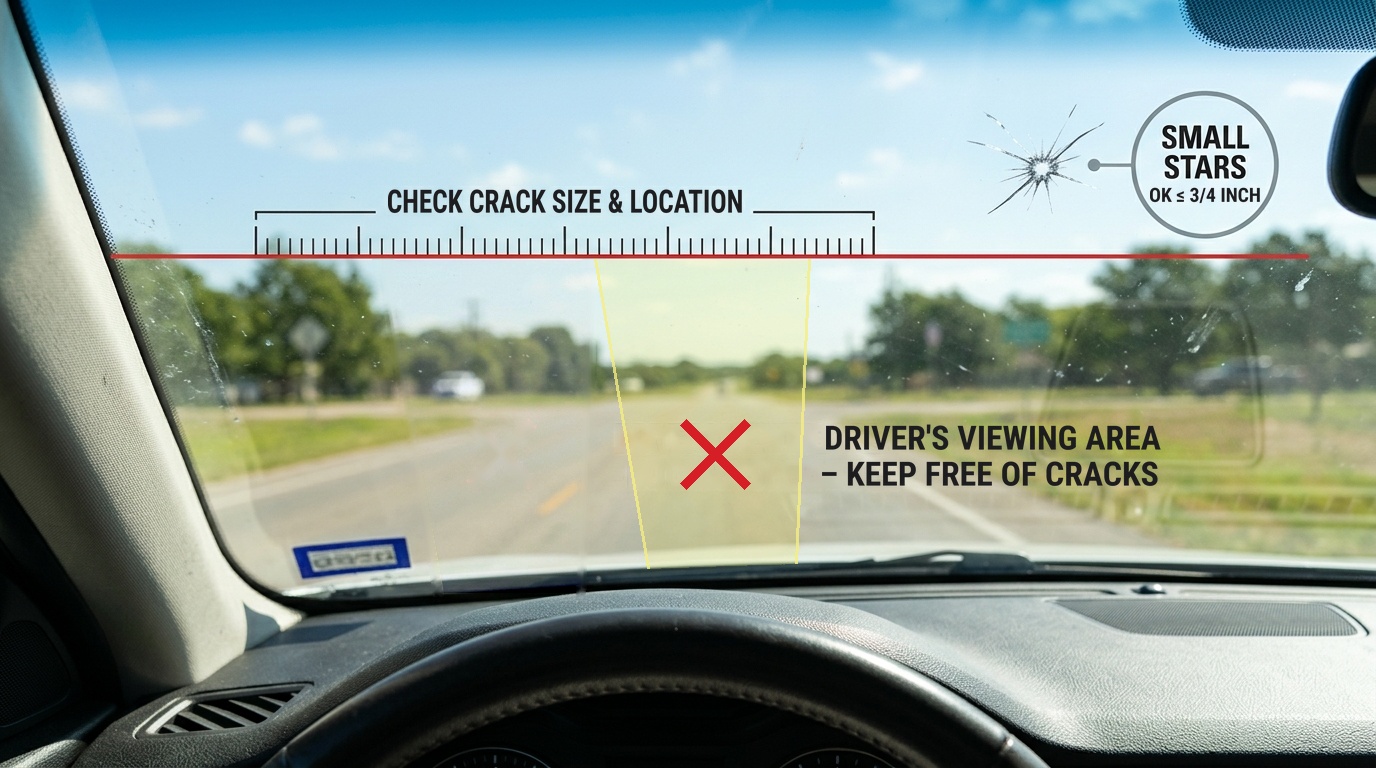
Commercial vehicles are held to federal motor carrier standards (49 CFR 393.60). The rules focus on the windshield area above the top of the steering wheel, excluding a 2-inch border at the top and a 1-inch border on each side. In that zone:
Damage Type
Allowed?
A single crack that doesn’t cross any other crack
Allowed
A chip or damaged spot that a 3/4-inch disc can cover, at least 3 inches from other damage
Allowed
Two or more cracks that intersect
Not allowed
A chip or star break larger than 3/4 inch
Not allowed
Damage clustered within 3 inches of other damage
Not allowed
For fleet owners, damage in the driver’s wiper sweep area is the biggest risk. A truck that fails these standards during a roadside inspection can be placed out of service until the glass is fixed.
Can You Get a Ticket for a Cracked Windshield in Texas?
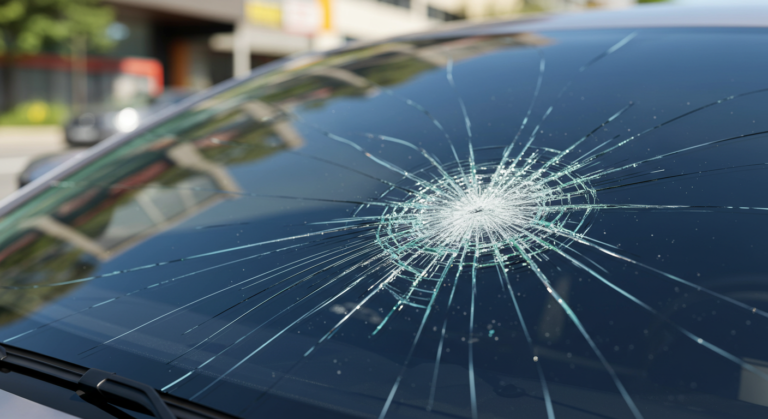
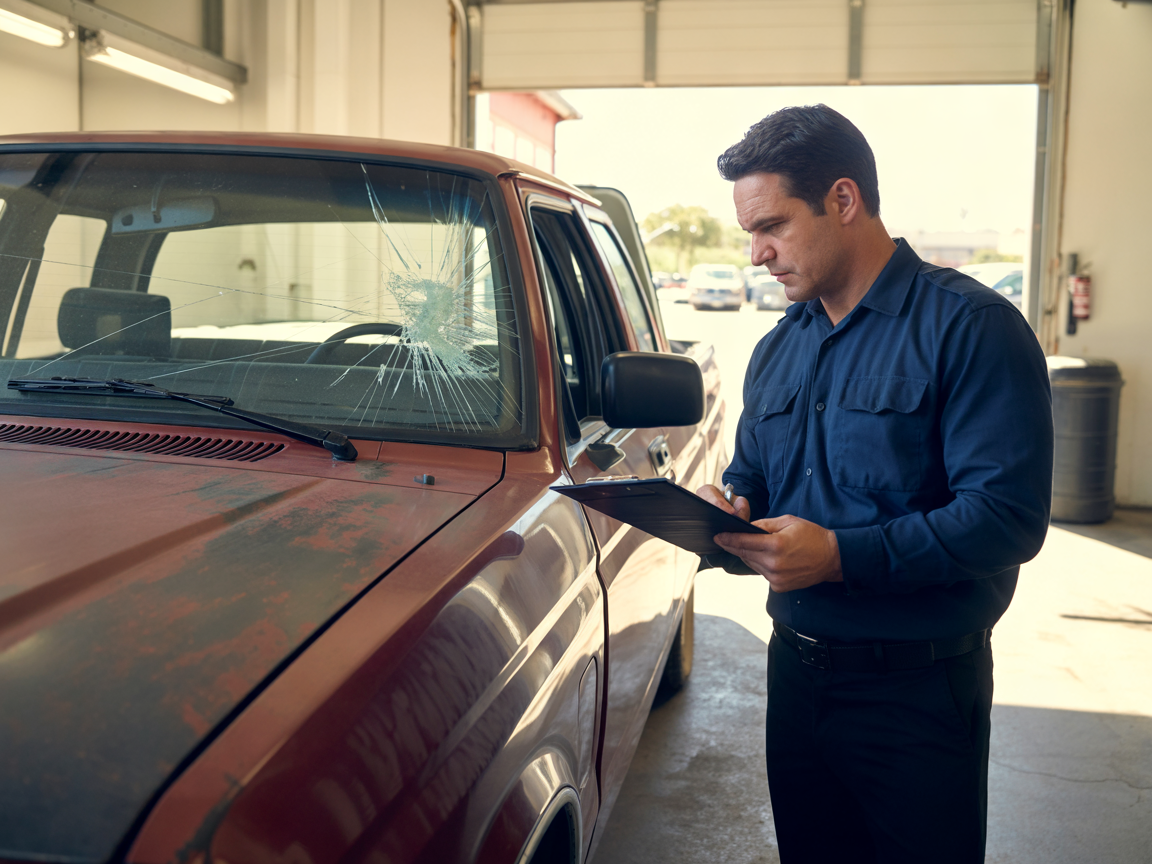
Yes. Under Texas Transportation Code §547.004, it’s a misdemeanor to drive a vehicle that is unsafe enough to endanger someone. If an officer decides a crack blocks your view of the road, you can be cited. There is no exact crack size written into law for passenger vehicles, so the decision comes down to the officer’s judgment of how much the damage affects visibility.
The good news for non-commercial drivers: a court can dismiss the charge if you fix the windshield before your first court appearance and pay a small administrative fee. Damage directly in front of the driver, long cracks across your line of sight, and spiderweb or star breaks carry the most risk. A small chip low on the passenger side is unlikely to draw attention.
Repair vs. Replace: Typical Costs
Prices vary by vehicle, location, and glass type, but these are common ranges:
Chip repair: About $60–$150 per chip
Small crack repair: About $70–$150, usually for cracks under a few inches
Windshield replacement: About $250–$500 for many standard vehicles
Replacement with ADAS calibration: Often $500–$1,000 or more for vehicles with lane-keeping cameras, rain sensors, or heads-up displays
DIY repair kit: About $15–$30, for small chips only
Many comprehensive auto insurance policies cover chip repair with little or no out-of-pocket cost, and some cover replacement after your deductible. Check your policy before paying out of pocket.
Why Fixing Early Still Makes Sense
Losing the inspection requirement doesn’t make a cracked windshield harmless. There are four good reasons to fix it early:
Safety: The windshield helps support the roof in a rollover and helps the passenger airbag deploy correctly. Cracked glass is weaker glass.
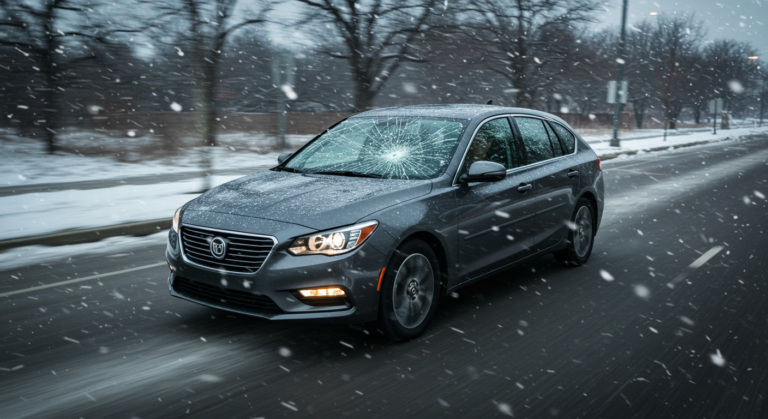
Cracks spread: Texas heat, cold fronts, and potholes put stress on damaged glass. A chip that costs under $150 to repair today can turn into a full replacement within weeks.
Driver-assist systems: On newer vehicles, damage near the camera area can interfere with lane-keeping and collision-warning features.
Tickets and resale value: Visible damage invites a traffic stop and lowers what a buyer or dealer will pay for your vehicle.
When You Should Repair Right Away
The damage is directly in front of the driver or inside the wiper sweep area.
The crack is longer than a dollar bill or has started branching.
The chip has grown since you first noticed it.
Your vehicle has a camera or sensor mounted behind the windshield.
You drive a commercial vehicle subject to inspection.
When It Can Wait (Briefly)
The chip is small, low on the passenger side, and hasn’t changed in several weeks.
A glass technician has confirmed the damage is stable and repairable.
Even then, schedule the repair soon. Small chips are the cheapest damage to fix and the easiest to prevent from spreading.
Your Options
DIY repair kit: Works only on small chips, and the results are often uneven. Resin applied without professional tools can leave visible haze in your line of sight.
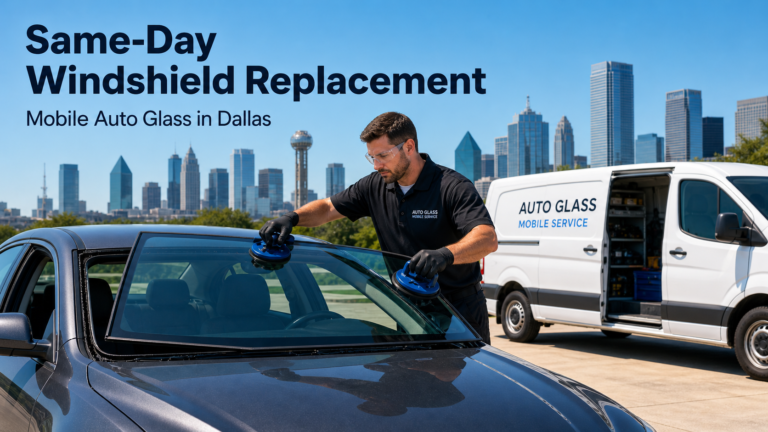
Mobile auto glass repair: Many Texas shops will repair chips at your home or workplace, often the same day.
Professional replacement: For large or spreading cracks, a certified technician can replace the glass and recalibrate driver-assist cameras, usually in a few hours.
Insurance claim: Glass-only claims under comprehensive coverage are common and are usually handled separately from accident claims.
Final Verdict
You won’t fail a state safety inspection over a cracked windshield in Texas anymore unless you drive a commercial vehicle. But a crack can still get you ticketed, weaken your vehicle’s structure, and spread into a costly replacement. Repairing chips and small cracks early is almost always worth it. If you still have questions about Texas inspection cracked windshield rules, or the damage is in your line of sight or growing, have a local auto glass technician take a look now.
Frequently Asked Questions
Do I need a safety inspection in Texas in 2026?
Not for most personal vehicles. Texas ended safety inspections for non-commercial vehicles on January 1, 2025. You pay a $7.50 replacement fee at registration instead. Commercial vehicles still need a safety inspection, and 18 counties require an emissions test.
Does the Texas emissions test check my windshield?
No. The emissions test checks emissions-related parts such as the catalytic converter, gas cap, and exhaust system. Windshield condition is not part of it.
Is it illegal to drive with a cracked windshield in Texas?
It can be. Texas law prohibits driving an unsafe vehicle, and an officer can cite you if a crack blocks your view of the road. For non-commercial vehicles, the ticket can usually be dismissed if you fix the windshield before your first court date.
Will insurance pay to fix a cracked windshield in Texas?
Often, yes. Many comprehensive policies cover chip repair with little or no deductible and cover replacement after the deductible. Coverage depends on your policy, so check with your insurer first.
Most car owners would agree that Airbags are airbags are what keeps you safe inside a car. However, the one thing you often forget is the auto glass or windshield. While airbags can help you during an accident, it’s the auto glass that prevents you from literally being thrown out of the car during an…
At Faith Auto Glass, we understand the importance of maintaining the integrity of your vehicle. As winter approaches, addressing windshield cracks becomes crucial for Dallas drivers. Ignoring minor damage in warmer months can lead to serious issues in colder weather. Temperature fluctuations and harsh conditions exacerbate cracks, compromising visibility and safety. Ensuring your windshield is…
The winter months are fast approaching and now is the time to do something about that cracked windshield. When the temperature drops outside, driving around with a cracked windshield can be dangerous! Glass expands and contracts when the temperature drops and this could make a small crack grow much larger. This can happen very quickly…
Even though Dallas does not face the same icy extremes as northern states, November marks the start of cooler mornings, occasional frost, and changing weather that can stress your windshield. At Faith Auto Glass Dallas, we know that a well-maintained windshield is critical for safety, comfort, and preventing costly damage. Use these practical tips to…
Navigating the insurance claim process for windshield damage can feel overwhelming, particularly when you’re dealing with a crack or chip that needs immediate attention. Understanding how to file a windshield insurance claim in Texas is essential for every policy holder, as the Lone Star State experiences its fair share of road debris, hail damage, and…
Outcome: Yes, you can get your windshield replaced the same day in Dallas, Texas, through mobile auto glass services. Most mobile windshield replacement at home Dallas appointments complete within 2-4 hours from initial contact to safe drive-away time. Skill level: No technical expertise required—professional glass installation experts handle all work. Before You Begin: Prerequisites for…

 House Bill 3297 removed the safety inspection requirement for non-commercial vehicles starting January 1, 2025. Instead of paying for an inspection, drivers now pay a $7.50 Inspection Program Replacement Fee when they renew their registration. Owners registering a brand-new vehicle pay $16.75, which covers the first two years.
That means the old question, “Will my cracked windshield fail inspection?”, no longer applies to most personal cars, trucks, and SUVs in Texas.